
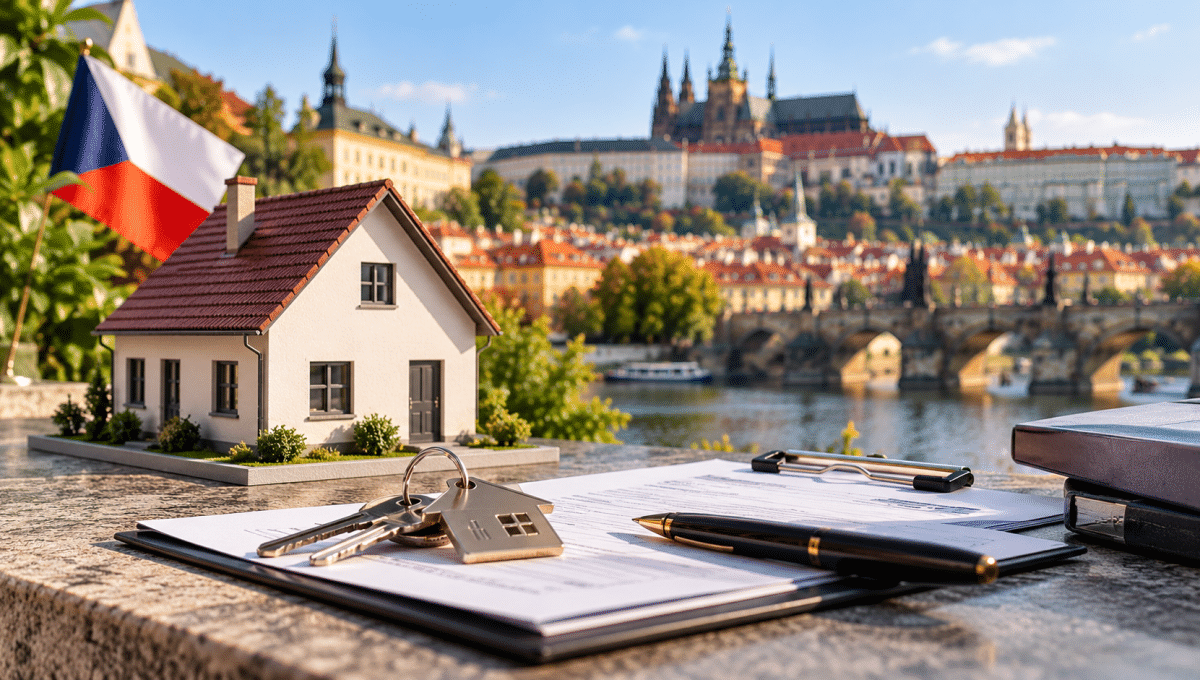
A foreigner can buy an apartment or a house in Czechia without having Czech citizenship or permanent residence. What’s more, since 2020, the 4% property acquisition tax has not applied there. However, that doesn’t mean you can buy without additional costs. You’ll need to factor in any VAT, the cadastre fee, and legal services. Find out how the transaction works, which documents to prepare, and what to watch out for to safely become the owner of a property in Czechia.
Can a foreigner buy property in Czechia?
Yes – both an EU citizen and a person from outside the EU can, in principle, buy property in Czechia in their own name. You don’t need to set up a Czech company or have a residence permit. This applies to standard apartments, houses, and commercial units. Some types of agricultural and forest land may be subject to additional rules. In particular, when purchasing agricultural land by a person from outside the EU, you should check restrictions related to the buyer’s country of origin.
When browsing property for sale in Czechia, pay attention also to the type of right being offered. For apartments, especially in Prague, you may encounter either separate ownership of the unit or a share in a housing co-operative. Buying a co-operative share does not automatically mean you acquire ownership of the apartment. This is important for financing, later resale, and using the unit. That’s why, before you pay a deposit, check exactly what the offer covers.
What does buying property in Czechia look like, step by step?
The purchase begins with verifying the property in the Czech cadastre – Katastr nemovitostí. Check who the owner is and whether the property is encumbered by a mortgage, easements, or third-party claims. For an apartment, also verify the legal status of the common parts; for a house, check that the building documentation matches and confirm the purpose of the plot. Next, you can sign a reservation agreement, which secures the offer while your documents are reviewed and financing is obtained. Before paying the deposit, agree on the terms for getting it back, especially if the transaction depends on the bank’s decision.
A proper purchase agreement requires a written form and official notarisation of signatures, but it doesn’t have to be drawn up as a notarial deed. The purchase price is best settled via an escrow account run by a bank, a notary, or a lawyer, with funds released after the agreed conditions are met. Then, an application is filed to register ownership in the cadastre. The fee for a standard application is CZK 2,000, and the registration may be approved no earlier than after the 20-day protection period. Only an effective registration transfers ownership, and its legal effects take effect on the date the application was filed.
How much does it cost to buy property in Czechia? Taxes and additional fees in 2026
| Cost type | Amount or rate | When does it apply? |
|---|---|---|
| Property acquisition tax | 0% | Not in effect since 2020, regardless of the property price. |
| VAT on purchase | 12% or 21% | Applies to certain VAT-taxable transactions. The 12% rate applies to properties that meet the conditions for social housing construction. |
| Registration of ownership in the cadastre | CZK 2,000 | Standard fee for filing one application for registering ownership rights. |
| Legal services and signature certification | Depending on the scope of services | Costs of preparing or verifying the agreement, documents, and certifying signatures. |
| Escrow account | According to the service provider’s terms | When the purchase price is secured in a bank, notary, or lawyer escrow deposit. |
| Real-estate agent’s commission | As agreed in the contract | If the buyer has agreed to pay a commission for the brokerage. |
| Loan and currency conversion costs | Depending on the bank and the currency | For mortgage financing or converting funds into Czech koruna. |
| Annual property tax | Depends on the property and the municipality | After the purchase. The return is filed, as a rule, by 31 January of the following year. |
Before you buy, check the total price including VAT, the terms for settling the funds, and all fees resulting from the agreement. Property acquisition tax does not apply, but other costs may vary depending on the property and the financing method.
Which taxes and additional fees will you pay when buying?
In Czechia, you won’t pay property acquisition tax – the former 4% rate was abolished in 2020. In some transactions, however, VAT applies. Starting July 2025, VAT generally applies to the first sale of a completed property made within 23 months following the month of completion or a significant rebuild. The standard VAT rate is 21%, and the reduced 12% rate applies to certain residential properties that meet statutory conditions. In the secondary market, sales are usually exempt from VAT, although there are exceptions. Before signing the agreement, check whether the price stated in the listing includes the correct tax.
Also add to the budget the CZK 2,000 cadastre fee, legal services, signature certification, any escrow account fees, and loan costs. If the purchase is financed in another currency, currency conversion and the Czech koruna exchange rate also matter. If you’re interested in properties in Prague, Czechia or investment units in other cities, compare not only the asking prices but also the total transaction cost. A lower purchase price doesn’t always mean lower final spending, especially if the property needs renovation or additional formalities.
What to keep in mind after buying property in Czechia?
The new owner is required to file and settle the annual property tax – daň z nemovitých věcí. Its amount depends, among other things, on the size, the type of property, and coefficients applicable in the given municipality. The return is filed, as a rule, by 31 January of the year following the year of acquisition, taking into account special deadline rules. If you buy an apartment in 2026, the settlement will therefore relate to 2027. After you take over the unit, also ensure utility accounts are transferred, settle administrative fees, and keep the property handover protocol.
Are you planning to buy for rental purposes or later resale? Income from renting out property located in Czechia is, in principle, subject to Czech taxation, even for non-residents. When selling, income tax exemptions may apply, including those related to residing in the unit for at least 2 years or a sufficiently long holding period, often amounting to 10 years. The details depend on your individual situation and the purchase date. So before choosing a property, determine not only how you will finance it, but also what you plan to do with it in the future – your own apartment, renting it out, or investing for resale.



