
Buying a car abroad is tempting—especially in the Dutch market, where vehicles are well cared for, well serviced, and often cheaper than in Poland. The problem starts shortly after, when transport, excise duty, translations, and registration come into play. And then the question arises: how much does it really cost to import a car from the Netherlands—not on paper, but in practice? In this guide you get specifics—numbers, examples, and realistic cost ranges. You’ll also learn how to bring a car from the Netherlands step by step, where you can overpay, and how to avoid it.
How to import a car from the Netherlands step by step – from purchase to registration
The process of importing a car from the Netherlands consists of several mandatory stages you need to complete to legally drive the car in Poland. First you buy the vehicle and deregister it with the Dutch RDW authority, where you receive white export plates valid for 14 days along with a full set of documents.
That’s when logistics begin—you have limited time to transport the car to Poland and start the formalities.
The next steps are as follows:
- deregister the car with RDW and collect the documents,
- arrange transport or drive it back,
- pay excise duty in Poland,
- carry out the technical inspection,
- have the documents translated,
- register the vehicle at the communications department.
Key deadlines you must keep:
- 14 days to file the excise declaration (AKC-US),
- 30 days to pay the excise tax,
- 30 days to register the car in Poland from the moment of entry.
If you mix up the order or miss the deadlines, you may face financial penalties or issues during registration.
How much does it cost to import a car from the Netherlands? A full breakdown of expenses
The total cost of importing a car from the Netherlands depends on the vehicle’s value, engine capacity, and the chosen transport method, but in practice it comes to around 3,000 zł up to even 10,000 zł and more. The final amount consists of several mandatory expenses you should factor in already at the planning stage—above all, transport (e.g., by trailer or driving it), excise tax, registration fees, technical inspection, document translations, and third‑party liability (OC) insurance.
Sample cost estimate for a car worth 40,000 zł (engine up to 2000 cm³):
- excise duty: 1,240 zł,
- transport by trailer: approx. 2,000 zł,
- registration: 160 zł,
- technical inspection: approx. 100–170 zł,
- translations: approx. 200 zł,
- short‑term OC: approx. 500 zł (equivalent).
That totals roughly 4,000–5,000 zł in additional costs. For more expensive cars or larger engines (e.g., above 2.0), costs rise quickly—mainly due to the high excise tax reaching even 18.6% of the car’s value.
Transporting a car from the Netherlands – trailer or driving it back?
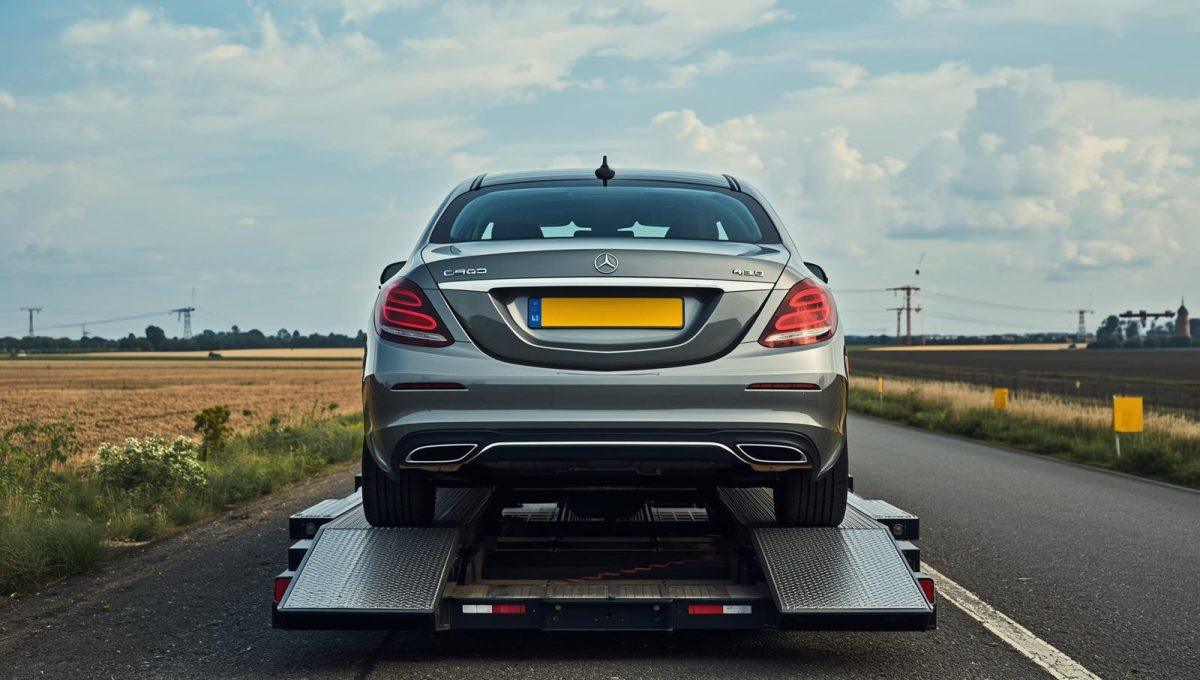
Transporting a car from the Netherlands is one of the first and most important costs that appears right after purchase—and in practice it often determines whether importing a car from the Netherlands will be profitable. The most common solution is bringing the car from the Netherlands on a trailer, as it offers full comfort and safety—you don’t have to worry about the vehicle’s technical condition or the formalities related to departure. Average transport prices range from 1,600 to 3,000 zł, and for door‑to‑door services rates hover around 1.7–2 zł per kilometer. For example, transport on the Amsterdam–Warsaw route costs about 2,000 zł, while from Rotterdam to Rzeszów it can reach even 3,000 zł, especially for an individual order.
An alternative is driving the car back on its own wheels, which at first glance seems cheaper, but in practice also generates specific expenses. You must buy export plates (25–35 euro), arrange short‑term OC (approx. 120 euro), and add fuel costs, which usually amount to 300–500 zł. You also need a valid APK technical inspection and to organize the entire trip. As a result, the total cost of this option may approach the price of a trailer, and on longer routes—even exceed it.
The biggest downside of driving back is the risk. If a car imported from the Netherlands has a hidden fault, it may mean an enforced stop abroad, an expensive repair, or the need for emergency trailer transport. That’s why more and more people choose to work with companies that handle imports from the Netherlands end‑to‑end—they collect the vehicle from the seller, secure the paperwork, and deliver the car to the indicated address in Poland. This solution will be especially appreciated by those who lack import experience or simply want to avoid stress and unforeseen costs.
Tax when importing a car from the Netherlands – how much will you pay and what does it depend on?
Excise duty is the largest mandatory cost when importing a car from the Netherlands, which can range from a few hundred to even several thousand zł—everything depends on engine capacity and drivetrain type.
In 2026 specific rates apply, calculated on the vehicle’s market value (not always the one in the contract!):
- engine up to 2000 cm³ – 3.1% of the car’s value,
- engine over 2000 cm³ – as much as 18.6%,
- hybrid up to 2000 cm³ – 1.55%,
- hybrid 2000–3500 cm³ – 9.3%,
- electric cars – 0% excise.
An example shows the scale of the difference:
- car for 50,000 zł (up to 2.0) → excise 1,550 zł,
- car for 50,000 zł (over 2.0) → as much as 9,300 zł.
That’s exactly why engine choice is crucial when importing—often more than the car’s price itself.
Who has to pay excise duty when importing a car from the Netherlands?
Excise duty must be paid by every person or company that imports a car from the Netherlands to Poland and intends to register it. It doesn’t matter whether the car was bought privately, through a dealership, or with an intermediary’s help—in practice the tax obligation always rests with the vehicle’s purchaser. This applies both to people importing a car for personal use and those planning to resell it. Exceptions are few and mainly cover electric cars (excise‑exempt), selected plug‑in hybrids, and situations involving household effects accompanying a change of residence. In all other cases, when importing a car from the Netherlands you should expect to settle the excise yourself or ensure that a company acting on your behalf does it.
Importing a car from the Netherlands can be very cost‑effective, but only if you know all the costs and plan the entire process well. Transport and excise duty matter the most, as they can significantly increase the purchase price, so before deciding it’s worth calculating the full cost carefully. If you approach the topic wisely and take care of the formalities, a car imported from the Netherlands may turn out to be a much better choice than one from the domestic market.
Frequently asked questions about importing a car from the Netherlands
What does it actually cost to import a car from the Netherlands?
The cost of importing a car from the Netherlands usually ranges from about 3,000 to 10,000 zł, depending on the vehicle’s value, engine, and transport. Excise duty and transport have the biggest impact and can significantly increase the final price.
What fees does importing a car from the Netherlands include?
Importing a car from the Netherlands includes, among others, excise duty, transport, technical inspection, document translations, and registration. Additionally, you should account for the cost of short‑term OC and any travel expenses.
Is it worth importing a car from the Netherlands?
Importing a car from the Netherlands is worthwhile if you calculate all costs precisely and choose the right vehicle. In many cases, a car imported from the Netherlands is better maintained than those available on the domestic market.
How long does it take to import a car from the Netherlands and register it?
The import itself can take from 1 to several days, depending on transport. The whole process, including formalities and registration, usually takes from a few days up to a maximum of 30 days.
Can you drive the car back from the Netherlands?
Yes, importing a car from the Netherlands by driving it back is possible, but you must buy export plates and insurance. In practice, costs may be close to a trailer, and the risk of a breakdown is higher.
Who pays excise duty when importing cars from the Netherlands?
When importing cars from the Netherlands, excise duty is always paid by the person who registers the vehicle in Poland. This obligation applies to both private individuals and companies.
Does every car imported from the Netherlands incur excise duty?
Not every one—an electric vehicle imported from the Netherlands is exempt from excise duty. Lower rates also apply to selected hybrids.
What should you watch out for when importing a car from the Netherlands?
When importing a car from the Netherlands, carefully check the technical condition, service history, and vehicle documents. The most common mistakes are underestimating costs and missing formal deadlines.



